
The Utility Surprise Nobody Warns You About: Gas Hookup on Rock
Updated: Sep 29

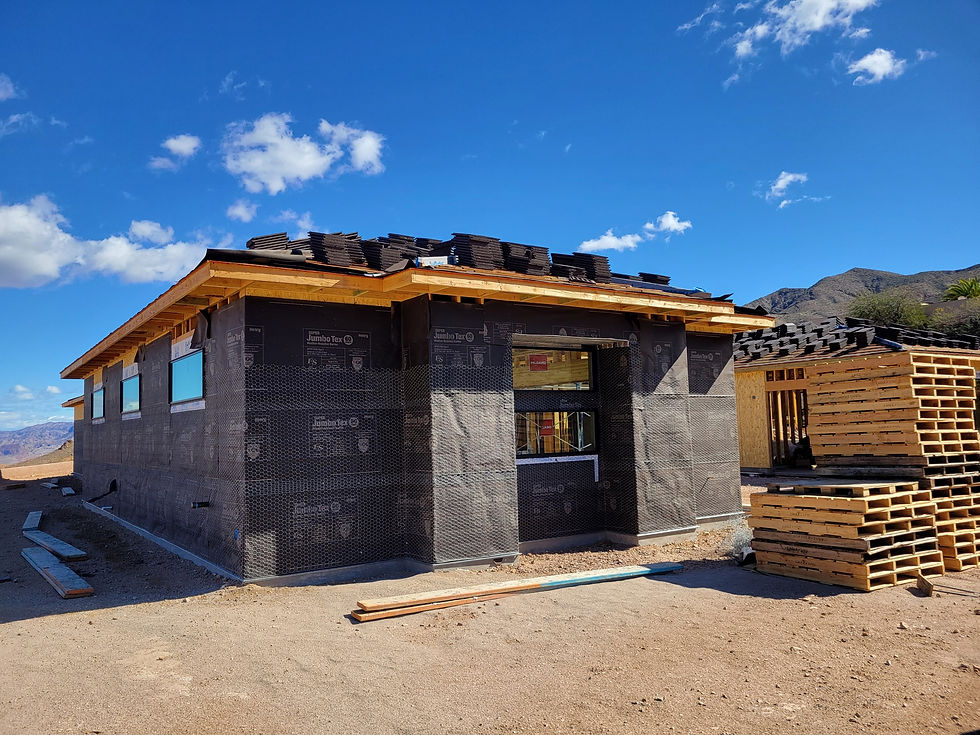
The name gives it away — this house sits on a rock ridge. Before we bought the lot, I did what any reasonably careful buyer does: confirmed all utilities were stubbed at the curb. Electric and water were easy to verify; both were visibly marked and easy to point to. The gas line was a different story. I called the local gas company, and they confirmed a line existed at the property, but couldn't tell me exactly where.
It wasn't until the build was underway that the gas company actually came out and located the stub. That's when the real number showed up: an additional $10,000 to trench the line to the house. Gas hookup is typically free. Ours wasn't, because the lot sits on a granite and shale rock formation, and trenching through solid rock is a different job entirely than trenching through dirt. It was not a line item I'd budgeted for, and it ate straight into money I'd earmarked for finishes.
As it turned out, that $10,000 was actually the cheaper of the two options on the table. The gas company's plan was to tie into the line at the neighboring property, on our side of the street, rather than trench across the street. Our builder had already warned us that crossing the street would be significantly more expensive, which was exactly why we'd agreed to the tie-in option instead.
Then one day I stopped by the site and found them trenching straight across the street.
We'd already paid the $10,000. The street was torn up. Asphalt was ripped out. And I had no idea what any of that meant for the bill we'd already settled. I braced for the worst.

It turned out fine — better than fine, actually. The gas company trenched the street, crossed to our side, and never charged us an additional cent. The short version: nobody from the gas company had ever physically walked the site before quoting the job. They priced it as if we were sitting on a flat, street-level lot, which meant we were quoted — and paid — the base rate for a job that, given our actual terrain, should have cost quite a bit more. Crossing the street ended up being the cheaper option for them, not us, and the mismatch worked entirely in our favor.
What This Actually Costs (and Why It Varies So Much)
Gas line trenching typically runs $15 to $30 per linear foot for materials and labor, though a straightforward, short hookup near an existing line can land closer to $500–$2,000. Rocky or compacted soil is the wildcard: it can add 50–150% to trenching costs compared to easy-digging soil, and jobs that require horizontal directional drilling under a street, driveway, or established landscaping run even higher. Add in permit fees, typically $100–$300, and it's easy to see how a "should be simple" hookup turns into a five-figure surprise on the wrong lot.
Here are 10 things I'd tell any buyer to check before signing on a lot, utility-related or otherwise:
Confirm each utility's exact location, not just its availability. "It's on the property" doesn't mean it's easy — or cheap — to reach.
Ask what's under the lot. Rock, caliche, high water table — all of it changes your excavation and utility costs before you've laid a single stud.
Check for easements. A utility or access easement can restrict where you build, even on land you fully own.
Get a soils report before you fall in love with the lot. It's the single most consequential $1,500 you'll spend.
Ask about setbacks and lot lines in writing, not from a neighbor's best guess.
Verify sewer vs. septic, and if septic, get a percolation test before you assume anything.
Ask who maintains the road to your lot, especially if it's not a city-maintained street.
Check flood zone and drainage. Desert lots look dry until the one week a year they aren't.
Confirm HOA or covenant restrictions on exterior materials, colors, or even landscaping.
Walk the lot at different times of day — sun exposure, wind, and privacy all change more than people expect.
None of these guarantee a surprise-free build. Ours certainly wasn't. But they'll at least mean your surprises are smaller than a gas line buried in rock.
The Takeaway
If you're buying land — especially anything with visible rock, a hillside, or unusual terrain — don't settle for a phone call confirming utilities are "stubbed at the property." Ask the utility company to send someone to physically walk the site and give you a written estimate based on the actual ground conditions, before you're under contract if at all possible. A phone confirmation tells you a line exists. It tells you nothing about what it will cost to reach it. And build a rock/terrain contingency into your budget from day one — 15-20% above a standard quote isn't unreasonable for anything sitting on ledge, shale, or granite. It won't guarantee you dodge a bill like ours. But it means you won't be blindsided by one, either.

Comments